BCA Buyer App.
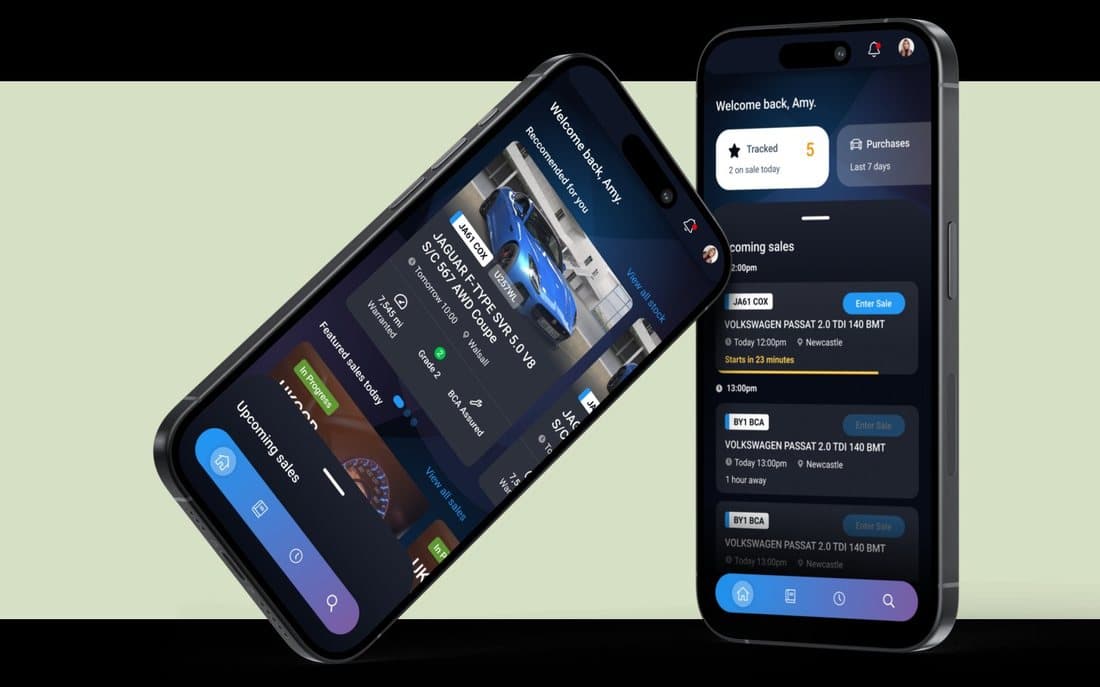
A trade buyer's digital assistant — reframed from “put bidding on an app” to solving buyers' biggest problem: keeping track of sale day.
Context.
Why BCA needed to rethink the trade-buyer experience from the ground up.
Launch an app that transforms trade vehicle buying — physical and online.
BCA is the leading end-to-end digital B2B used-car marketplace across the UK and Europe. But before COVID, 70% of vehicles were sold at physical auction — only 30% online. Years of investment had gone into the Vendor experience while trade buyers were left behind.
C-suite leadership wanted to signal BCA's commitment to digital by launching an app for trade buyers, starting with live bidding. I challenged that: live bidding alone wouldn't solve buyers' real problems. Our COO gave us a few weeks to frame the problem properly, and the research showed buyers' biggest problem wasn't how to bid. It was keeping track of sale day. With my product counterpart, I used that evidence to move leadership from “put bidding on an app” to “solve the buyer's top pain point”.
- Research leadership
- Reframing the brief
- C-suite alignment
- Workshop facilitation
- Design direction
- Team leadership
The Challenge.
Eight structural problems standing between BCA and a great buyer experience.
The existing trade-buyer experience was carrying decades of legacy. Bid capture and sales were slow at physical auction. Online and offline lived in separate worlds. Tech was over twenty years old. And a large slice of the buyer base wasn't digitally fluent.
- No easy way for buyers to track sale-day activity — which vehicles, which hall, what time.
- No visibility of buyers attending physical auctions.
- Limited bidding data — underbidder activity not captured at physical auction.
- Bid capture and sales process slow at physical auction.
- Online auction platform built on technology over two decades old.
- A large proportion of the buyer base lacking digital proficiency.
- Two separate online experiences for searching and buying vehicles.
- Online buying fee per vehicle — a multi-million-pound buyer-fee revenue stream tied to old tech.
“I can't keep track of my sale day.”
Which vehicles, which hall, what time — tracked manually, and bids missed as a result.
We only ever saw the winning bid.
No reliable view of who attended physical auctions, and no record of who bid and lost. Without that demand data, there was no intelligence to act on.
Solve the buyer's problem, and capture the data behind every sale.
Live bidding alone would only have captured the winning bid. Tracked vehicles and every bid, won or lost, would power targeted comms, recommendations and intelligence.
“Mirroring the online auction platform would have been a missed opportunity. Buyers didn't want another bidding tool. They wanted to know what was happening with the cars they cared about, wherever they were.”
The Approach.
Challenge the brief, then earn the right to change it.
Challenging the brief.
An open session with the C-suite and senior stakeholders on what we'd build and how. I challenged the plan: live bidding on an app would signal intent, but it wouldn't move the needle for buyers. Our COO respected the challenge and gave us a few weeks to come back with the problem properly framed.
Evidence first, then build.
We agreed a design-led programme with C-suite checkpoints at each stage: frame the problem with data and research, explore multiple concepts, prototype the strongest, validate with real buyers — and only then build.
The Design Process.
Seven weeks from challenge to validated concept, with C-suite checkpoints throughout — then an ongoing build.
Discovery & Vision
3 weeks
Analysed existing data, analytics and past surveys, ran workshops with CS and BDE teams, and interviewed buyers in their dealerships and at physical auctions. The output: a backlog of candidate ideas for the app.
Proof of Concept
2 weeks
Low-fidelity concepts for the strongest ideas from the backlog. We landed on a digital assistant and built a clickable prototype to simulate the experience.
Iteration & Validation
2 weeks
Tested the prototype with trade buyers at physical auction centres and in their dealerships, then iterated against findings to lock the direction.
Develop MVP
Ongoing
Productionised the validated experience with the cross-functional build team — shipping iteratively while live research continued in parallel.
Discovery & Vision.
Where the brief changed.
Buyers' biggest problem wasn't bidding. It was keeping track of sale day.
A small cross-functional team formed quickly. We worked through existing data, analytics and past surveys, ran workshops with our Customer Service and BDE teams, and benchmarked the field — then went into dealerships and physical auctions to interview buyers.
The pattern was clear. Buyers were juggling the day-to-day running of a dealership while tracking which vehicles were going through which hall, and when — by hand. They were missing vehicles because they weren't there at the right moment.
The resulting wireframe became a digestible single source of truth — used to validate with users and secure C-Suite buy-in at each checkpoint.
With trade buyers in their dealerships and at physical auctions.
Workshops with the teams who speak to buyers every day, plus past survey data.
The Solution.
Not the auction platform on a phone — a buying assistant in your pocket.
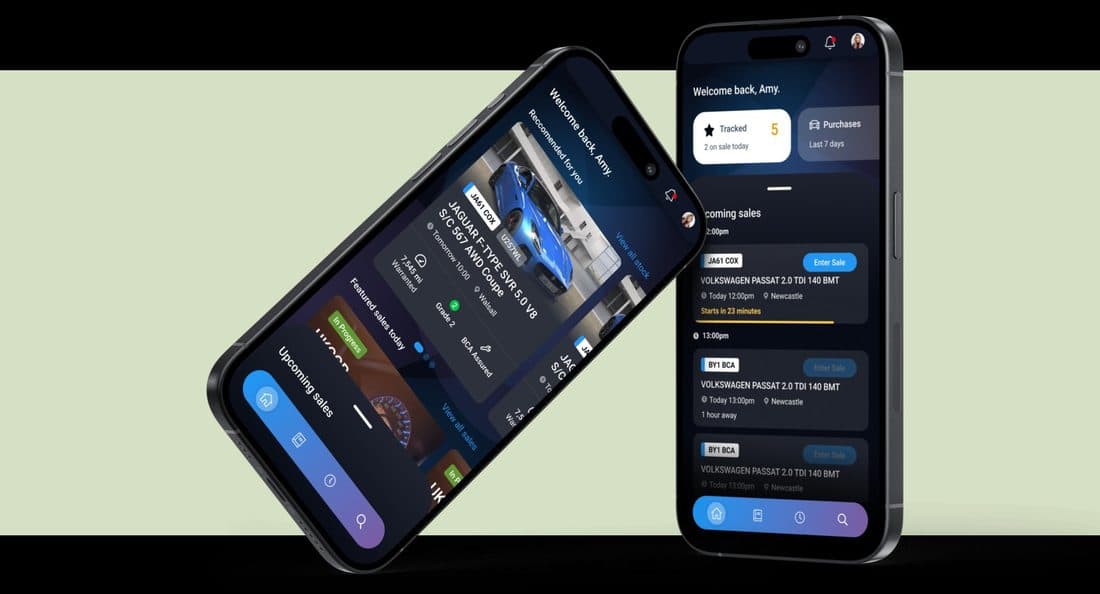
A clickable prototype validated with real buyers became the foundation for the live product — a single experience for both physical and online buyers. Tracked sales put sale day in buyers' pockets, alongside live bidding, personalised feeds and intelligent insights. And every tracked car and every bid, won or lost, fed the data BCA had never had.
Results.
From UK launch to the foundations of a fully online BCA.
of the trade-buyer base using the app within the first six months.
of all pre-sale engagement now flows through the app.
A UK launch that earned long-term investment.
Launched in 2019, the Buyer App laid the foundations for the digital-first work that followed — through to 2023. Search and live bidding followed within twelve months, and the app became the engine for anonymous digital interactions between buyers and vendors — increasing selling speed and opening new sales channels. Happy teams, happy stakeholders, and a funded roadmap.
online sales when COVID hit.
To power the app we built new APIs and microservices to unlock data trapped in decades-old legacy systems — tracked vehicles, search, live bidding. When BCA went fully online almost overnight, those foundations were already in place, accelerating a new BCA web platform alongside the app.
The app kept vehicles moving safely.
Buyers used to turn up at auction centres whenever they liked to collect what they'd won. COVID safety rules meant we needed to know who was coming and what they were collecting. The app filled the gap: buyers pre-booked collection and were issued a digital pass-out, authorised in the app, to take vehicles off site.
For the first time, we could see demand.
As buyers tracked vehicles and bid digitally, every bid was captured, won or lost. With our decision intelligence and marketing directors, we used that underbidder data to build a bidding recommendation engine — miss out on a car at one auction centre, and we'd point you to a matching one at another.
More bids, more vehicles sold first time.
Every vehicle that didn't sell went into another sale — and through BCA Assured reports and checks all over again. More buyers tracking and bidding meant a higher chance of selling first time round, avoiding double handling and delivering a significant operational saving.
What I Learned.
Three things this work taught me.
Challenge the brief with evidence, not opinion.
Saying live bidding was the wrong thing only bought us a few weeks. What changed leadership's mind was coming back with research, data and a validated prototype — and C-suite checkpoints that let them see the evidence build.
Change behaviour, and the data follows.
We knew we couldn't see underbidder activity — we just didn't know how to capture it. Solving the buyer's sale-day problem did: once buyers tracked and bid in the app, they gave us the data as a by-product of getting value. Design for the behaviour, not the data.
Build foundations that travel.
European leadership wanted the app, but their markets ran on different systems, data and infrastructure. The proposition wasn't the blocker; the platform was. Designing the foundations with every market in mind from the start would have made the rollout far easier.
The best brief is the one you're willing to challenge.
Testimonials.
From the leaders I worked alongside at BCA.
Delivery of key strategic initiatives such as Buyer App, Digital Auctions & a plethora of other products has stepped changed a once physical business to a digital first.

First & foremost, Dean is a first-class leader who is able to extract maximum performance from any team. … his clarity of strategic thinking was critical in Constellation being first to market in a number of application areas.

Up next.
cinch Services
Product vision for cinch's next chapter.
All case studies
Six projects across design leadership, product design and service design.